


|
 |
|||
| Till the Fire Is Dashed | |||
| Sweden, 1988 (shot. 1960), 14 min, 16 mm, b/w, 1:1.37 | |||
| Director: Håkan Alexandersson, Carl Johan De Geer | |||
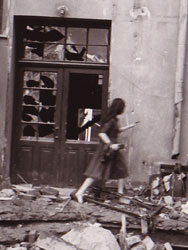
| The film is based on a brochure, "If war breaks out", that was delivered to all Swedish homes during the 1950s. The consequences of an atombomb were trivialized in the brochure which upset a lot of young people. If lacking adequate protection, citizens were advised to lay down on the ground and take cover behind their briefcases. |

 |
|||
| Cast | Håkan Alexandersson, Claudia Berger | ||
| Director/screenplay /director of photography /editor/production design |
Håkan Alexandersson, Carl Johan De Geer | ||
| Music | Urban Yman | ||
 |
|||
Håkan Alexandersson and Carl Johan De Geer, two young illustrators with an interest in photography became classmates at the School of Industrial Design back in 1959. Around 1960 they got themselves a 16mm Bolex and made two shorts in black and white: "Diger" (with music and vocals by Jan Lööf, later Janos in "The Cake"); this film has since disappeared, and "'Till the Fire is Dashed" with music by Urban Yman (later one of the musicians in Gunder Hägg/Blå Tåget). A film print of the latter film was found in an attic during the late 1980s. The film is based on a brochure, "If war breaks out", that was delivered to all Swedish homes during the 1950s. The consequences of an atombomb were trivialized in the brochure which upset a lot of young people. If lacking adequate protection, citizens were advised to lay down on the ground and take cover behind their briefcases. A huge construction site (where modern Stockholm now stands, near Malmskillnadsgatan by NK) was to suffice as a war-zone landscape, with pages from the Bible blowing around all over the place. The radio voice-over states that; "In case your clothes begin to burn, roll around 'till the fire is dashed." The tempo of the film hardly meets the expectations of the 1990s, but it's an example of the existential anxiety (in the shadow of the bomb) many youths wished to express during the late 1950s. | |||

